
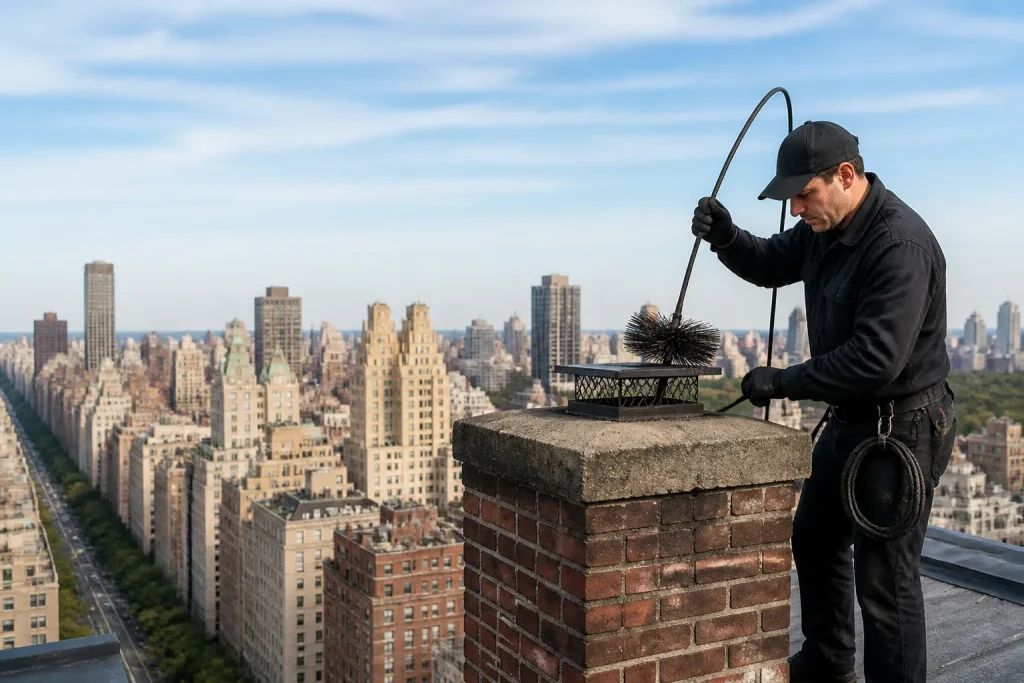
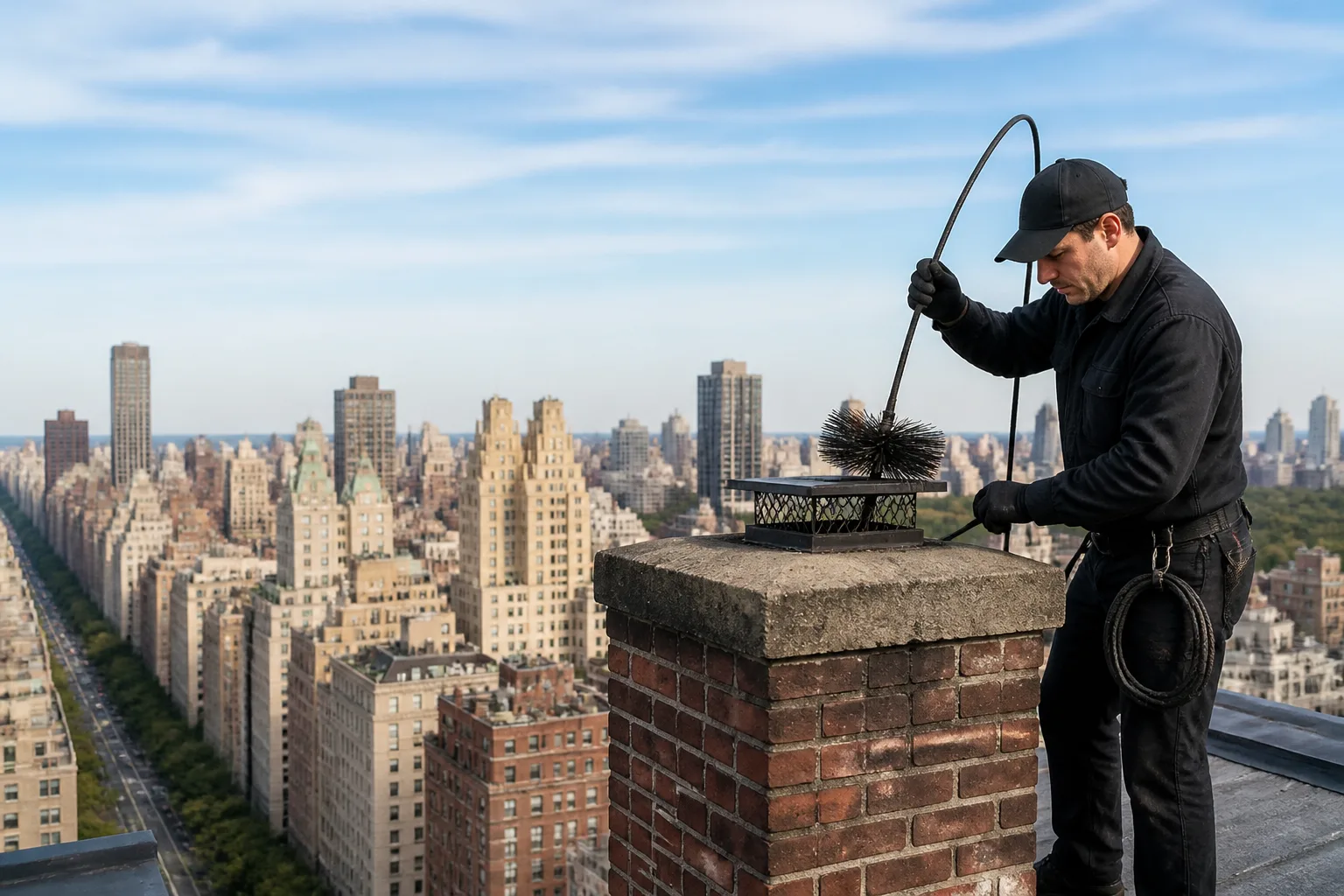
How to Choose the Right Chimney Cleaning Company in Upper West Side
CSIA certification takes 40+ hours of study and a proctored exam. “Licensed and insured” in New York can mean a general contractor’s liability policy that excludes chimney work. Knowing the difference before you book costs nothing; finding out after costs significantly more. Most Upper West Side homeowners pick a chimney company the way they pick a pizza place – the first name that comes up. Here’s how to actually verify one. And if you’d rather skip the research, call (833) 482-6118.
What credentials should a chimney company in Upper West Side actually hold?
Ask for three things by name: CSIA Certified Chimney Sweep status, NFI certification if you burn gas, and a New York City Home Improvement Contractor license. Each covers a different part of the job, and a company that can produce all three has already cleared a bar most don’t bother with.
- CSIA Certified Chimney Sweep: the technician has passed a proctored exam and committed to the Chimney Safety Institute of America’s code of ethics. It certifies them to inspect and sweep wood-burning chimneys to a recognized standard, not to sell you whatever they can.
- NFI certification: the National Fireplace Institute certifies technicians specifically on gas appliances, including venting and combustion. If your Upper West Side apartment has a gas fireplace or a gas insert, this is the credential that matters, since a wood-only sweeper shouldn’t be signing off on a gas vent.
- NYC Home Improvement Contractor license: the minimum legal bar for someone doing repair work in your home. It’s a starting point, not a finish line. Plenty of generalists hold one without any chimney-specific training.
A generalist with a brush can hold a license and still have no idea what they’re looking at inside your flue. Certification tells you they’ve been tested on the equipment and the standard; the license tells you they’re allowed to swing a hammer in your building. You want both, plus a technician who can explain what they found.
Why does the insurance certificate matter more in an Upper West Side co-op?
Because your building’s managing agent will ask for it, and because a COI that doesn’t name the building can delay or cancel the job the morning it’s scheduled. In a co-op or condo, get the certificate of insurance before anyone books a visit.
Here’s what to check on the COI:
- General liability coverage that explicitly lists chimney work, not just general construction. Some policies exclude fire and flue work.
- Workers’ compensation. If a technician is injured on your property and the company doesn’t carry it, the exposure can land at your door.
- The managing agent named as an additional insured. Upper West Side co-op boards typically require this before a vendor is allowed past the lobby, and the paperwork has to be issued by the insurer, not typed up by the contractor.
- Coverage amounts. Ask your building’s management what minimums they require and have the company confirm those numbers in writing.
If a company hesitates on any of this, that’s your answer. A chimney pro who works in Upper West Side apartment buildings deals with managing agents routinely and has the documents ready. The one who doesn’t will shrug and suggest you handle it.
What intake questions should a qualified chimney company ask you?
A real chimney specialist asks about fuel type, appliance age, the date of your last inspection, and any recent changes to your building’s HVAC or weatherization before they ever quote a price. Those answers change the scope of the job, and a technician who skips them is guessing.
Here’s why each one matters:
- Fuel type: wood, gas, and oil appliances need different inspection and venting standards. DuraFlex liner systems, for instance, are rated for all three, so the right recommendation depends on knowing what you burn.
- Appliance age and model: an older insert may have clearances or liner requirements a newer one doesn’t.
- Last inspection date: if it’s been years, the visit is likely a sweep plus a Level 2 inspection rather than a quick brush-out.
- Recent HVAC or weatherization work: a new boiler, a tightened-up apartment, or a change in ventilation can affect draft and how the chimney performs. Buildings get sealed up, and a flue that vented fine before can start misbehaving.
When someone asks these questions on the phone, they’re building a picture of your chimney before they arrive. When someone asks only for your address and a time, they’re selling a sweep, not a diagnosis. We ask the boring questions on purpose – they’re how the estimate ends up matching the work.
What’s the difference between a flashlight check and a Level 2 video inspection?
A flashlight look-up tells you almost nothing about the inside of a flue. A Level 2 inspection uses a video camera run through the full length of the chimney, and you get documented footage of what it found. In a co-op where the flue serves multiple units, that documentation isn’t a nicety. It’s your protection.
What to expect from a genuine Level 2 inspection:
- A camera on a flexible rod, fed through the flue, with a monitor you can watch in real time
- Footage of joints, offsets, and the flue liner, not just the firebox
- A recorded or photographed report you keep, showing cracks, gaps, or heavy creosote glaze
Why does this matter in Upper West Side buildings specifically? Because a cracked flue liner in a shared chimney can affect units above or below yours, and when a board or managing agent asks what was found, “the technician said it looked fine” won’t settle anything. Video will. It also protects you from the opposite problem: being told you need thousands of dollars in liner or masonry work with nothing to back it up. If a repair is recommended, ask to see the footage. Any honest company will show it, and if the work can safely wait a season, they should tell you that too.
That’s also why we treat a standalone inspection as a real service, not a foot in the door. It’s a Chimney Sweep Upper West Side visit that gives you the facts before you commit to anything. Every sweep includes camera inspection and a photo report, so you’re never taking our word for it.
How should you read a chimney estimate in Upper West Side?
Line by line. An itemized estimate separates the sweep, the inspection, the materials, the access work, and any repair, and it tells you the company knows exactly what the job involves before they start. A lump-sum number with no detail tells you they’ll sort it out once they’re on site – usually in their favor.
A properly itemized estimate breaks out:
- Sweep and inspection as separate or clearly combined line items, with the level of inspection named
- Materials by brand and type – a HeatShield resurfacing priced as HeatShield, a cap and crown priced with the specific product, not “materials: $X”
- Access and logistics – roof access, scaffolding, or interior protection where needed
- Repairs quoted against what the camera found, not a round number for “masonry work”
We name our materials on the estimate because it’s the honest way to quote. HeatShield ceramic resurfacing restores a damaged flue without a full rebuild; Olympia Chimney and Gelco products each solve specific problems. A lump sum hides which one you’re getting. The written estimate is what sets the final price, so read it before you sign.
When to call a pro: if your estimate includes a liner or masonry rebuild, get the video, get the itemization, and get a second opinion if anything feels vague. That costs nothing. A wrong scope does not.
Related services in Upper West Side: chimney sweep, chimney cap & crown, chimney repair.
The Bottom Line
The company worth hiring asks questions, carries specific credentials, documents its findings on camera, and itemizes its estimate. Those four things separate a chimney specialist from someone who owns a brush. Our technicians have up to 10 years of experience, and the local professional we connect you with is licensed and insured as the state requires. Every sweep includes a camera inspection and a photo report, and the sweep price is agreed before booking.
If you’re in Upper West Side and need help, Chimney Sweep Upper West Side offers free estimates – call (833) 482-6118. We answer 24/7. Fast dispatch from 7am to 7pm, Sunday through Friday. Closed Saturday.
Frequently Asked Questions
It depends on the job, which is why we set the price with a written estimate before booking rather than quoting a number out of the air. The inspection and camera report are included, and the estimate is free. Call (833) 482-6118 for an exact quote.
Yes, if you want to know what’s actually inside the flue. A Level 2 inspection with camera footage shows cracks and gaps a flashlight look-up can miss, and in a co-op it gives you documentation if the building or your insurer ever asks. Call (833) 482-6118 to schedule one.
Once a year if you burn wood regularly, and annually as a general rule even with light use, because a yearly inspection catches problems before they turn into repairs. Call (833) 482-6118 to book a visit before burning season.
Creosote builds up, and heavy creosote is what feeds chimney fires. A blocked or damaged flue can also let carbon monoxide back into the apartment. Nobody needs to scare you into a sweep, but an annual check is cheap insurance against a very expensive problem. Call (833) 482-6118 – estimates are free.
Written by the team at Chimney Sweep Upper West Side.
Need Chimney Cleaning Help?
Call Chimney Sweep Upper West Side - the local pro we connect you with is licensed and insured, with free written estimates in Upper West Side.
(833) 482-6118